
For an apartment connection, begin with the route from the building's common area to the individual flat. Find out who can approve that route and who will provide access on the installation day. Permission for shared spaces and permission inside the flat may involve different people.
Request a quotation that shows the service period, subscription, applicable taxes and any equipment or installation payment separately. This is the clearest way to understand what is due now and what will recur later. Confirm the final amount before treating a displayed monthly price as a complete order.


A realistic usage example for Krishna Kunj Apartment
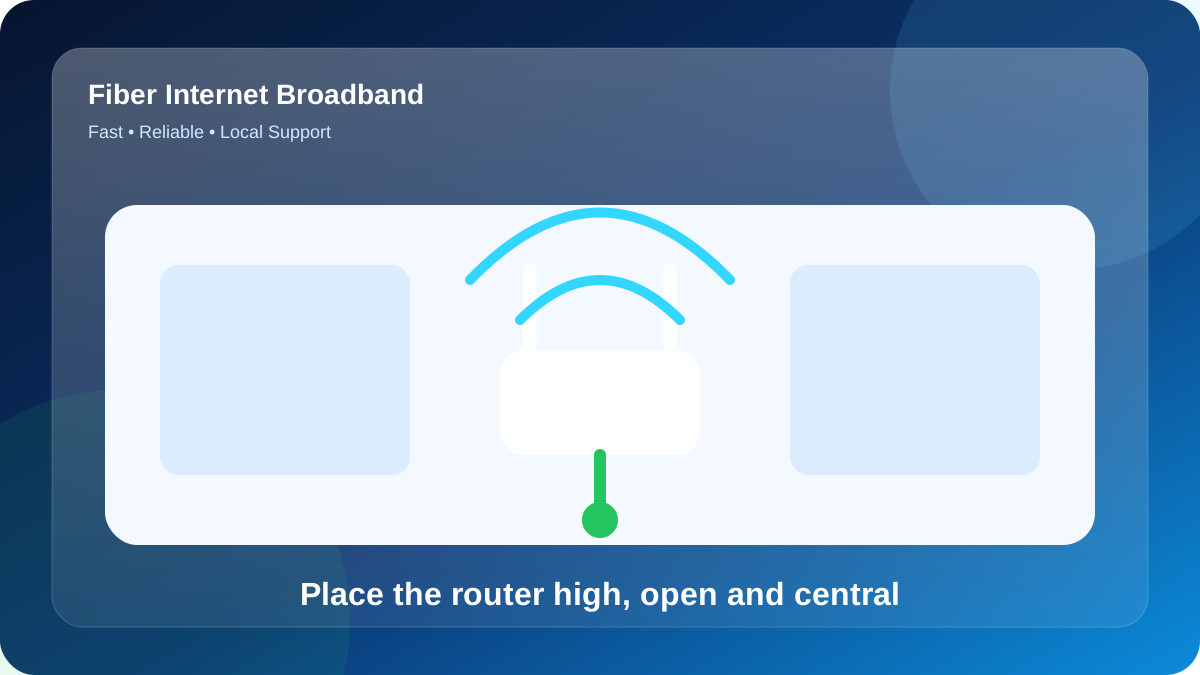
Choose the router position around where people use the connection, rather than automatically placing it at the nearest entry point. Doors, walls and the shape of the flat can affect Wi-Fi. Identify the work desk, television and other important locations before the equipment is fixed in place.
A shared building does not necessarily require a shared private network. Decide whether the order is for one residence or several independently managed units. Discuss equipment, account responsibilities and access control before extending connectivity beyond the original household.
After activation, test the flat using the actual devices and rooms that matter. If one room performs poorly while a wired connection is healthy, investigate the indoor wireless arrangement. Additional access points should be planned around the property rather than selected purely by advertised coverage figures.
Local network conditions around Krishna Kunj Apartment
Make a short list of activities that are genuinely active together. Live calls, streams, large transfers and cloud synchronisation affect demand differently from devices that are simply connected. Use the busiest normal period as the basis for the discussion.
Include upload-heavy work in the brief. Sending video, backing up files and remote camera access may matter even when ordinary browsing is comfortable. Ask how the proposed service fits those tasks instead of evaluating it solely by its download headline.
Identify the rooms and devices that must work reliably at specific times. A household may prefer dependable connectivity at two work desks over impressive results beside the router. The local network arrangement should reflect those priorities.
Settle the equipment and cable-route choices
Before the visit, describe the intended cable path and any areas that require permission. Shared corridors, terraces, shafts and rented interiors can involve different access arrangements. Resolve those practical questions alongside the booking so the technician can assess a usable route.
Mark the places where the connection must be useful: desks, televisions and other fixed or frequently used devices. Test those points with consistent equipment. A good result beside the router is a starting reference rather than a complete room-coverage assessment.
Contact Fiber Internet on 9990881098 with the account reference or exact installation address and a concise description of the issue. Include when it began and whether it affects one device, one room or the whole connection. Those facts help determine the next check.
100, 200 or 300 Mbps: choosing the right plan
Choose a speed tier by looking at overlapping activity rather than the number of devices registered on the router. A sleeping tablet contributes little traffic; a computer uploading a large project while others stream can change the experience. Describe the busiest realistic combination before choosing capacity.
| Speed | Price | Typical fit | Suitable uses |
|---|---|---|---|
| 100 Mbps | ₹499/month | Studio, room or light-use home | Video conferences, YouTube, email, study |
| 200 Mbps | ₹699/month | Family or shared flat | Several phones, OTT screen, work and study |
| 300 Mbps | ₹799/month | Power users and creators | Fast downloads, 4K, gaming, uploads |
The published speed is a useful planning reference, but it is not a promise that every device will achieve that figure over Wi-Fi. Router capability, wireless conditions, device hardware and the service being accessed can all affect an individual result. Use a capable wired device when checking the connection itself.
The published 200 Mbps tier is ₹699 per month. Its extra capacity may be useful when several activities overlap, but it does not correct a weak wireless path by itself. Compare the busy-period workload and obtain the complete first-payment and renewal terms.
More capacity can leave room for several activities to run together. It cannot by itself remove interference, repair a weak wireless link or change the distance to a game server. Check whether the constraint is household demand or indoor coverage before moving to a higher tier.
Test the router where the connection is used
Record which devices are supplied by the provider and which belong to you. Support and replacement responsibility can differ between an optical terminal, router and added access point. Agree those boundaries before purchasing or replacing equipment.
Ask for the model and features of the proposed router. Confirm its compatibility with the service and the devices that will use it. Terms such as dual-band or high-speed are useful only when the actual equipment and intended setup are understood.
Keep equipment payments separate from the service subscription. Where refundable security applies, retain the amount, return conditions and acknowledgement process. The end of the broadband account and the return of hardware may require separate steps.
Installation process for Paryavaran Complex
Check the power point and the space for the supplied equipment. Avoid deciding the router position only after the fibre has been fixed. The installation should support the rooms and devices you intend to use, with any additional cabling discussed in advance.
- Agree where the fibre will enter and terminate.
- Decide the required capacity: Choose 100, 200 or 300 Mbps using the number of users active at the same time, not only the lowest price or largest headline speed.
- Choose a practical router position and power point.
- Arrange any owner or building access permission.
- Confirm which work is included in the installation.
Agree how work outside the standard scope will be handled. This may include an alternative route, added equipment or finishing work that is not part of ordinary cable fixing. A clear explanation and approval should come before an unexpected additional charge.
Network load model for this Paryavaran Complex address
For the stated locality, give the exact building or house number, unit, floor and a useful landmark. Include a map pin if requested, but keep the written address with it. These details help the team review the actual premises instead of making an assumption from the locality name.
Ask for confirmation that the proposed address can be served through an approved route. A nearby connection is useful context, but it is not a guarantee for another floor or building. Wait for the property-specific response before relying on an installation date.
Mention access restrictions early, including locked common areas or permissions required from an owner or manager. State who can approve the work and who can attend the visit. The team can then identify the next practical step instead of booking around missing information.
If you are enquiring near a landmark, add the approach road and exact premises. A broad destination can cover several possible entrances or properties. The purpose of the landmark is to assist the address check, not to replace it.
Tell the provider if the address, floor or intended cable entry changes after the first discussion. The earlier feasibility response may no longer describe the proposed installation. Keep the revised arrangement with the quotation and appointment details.
Separate an availability enquiry from a confirmed order. First obtain the feasibility response; then agree the plan, equipment and payable terms. This avoids treating a website area listing as a promise that every property can be connected immediately.
| Zone | Purpose | Recommended check | Decision |
|---|---|---|---|
| rear bedroom | Main work zone | Use as the comparison point | Review during peak time |
| upper-floor room | Alternative router point | Test both Wi-Fi bands | Add wired wireless coverage for difficult Krishna Kunj Apartment rooms |
| shop counter | Wall-crossing test | Move whole-home Wi-Fi node closer | Retest after repositioning |
| stair landing | Edge of coverage | Verify practical app performance | Review during peak time |
Build a practical plan for your own premises
Draw a simple plan of your own premises and mark the rooms in active use. Add the fibre entry point, power sockets and suitable cable routes. This creates a practical design brief without assuming that a generic example matches the property.
List the devices used during the busiest period and what they are doing. Distinguish a device that is merely connected from one making a call, streaming or transferring files. Use your own routine rather than an invented device count.
Mark the work points where interruptions would matter most. Give those locations priority when deciding where to test or install a wired connection. A coverage plan is more useful when it identifies a required result for a specific place.
| Example load | Main activity | Priority | Planning action |
|---|---|---|---|
| 4 fixed screens | software updates | Medium-high | Avoid weak repeater paths |
| 6 mobile/laptop devices | multiplayer gaming | Shared | Keep study/work devices prioritised |
| 1 live call | CCTV upload | Upload-sensitive | Pause bulk transfers during critical calls |
| 7 total active clients | OTT streaming | Peak-hour total | Retest at the busiest hour |
How to measure actual broadband performance
Begin with a simple baseline: note the device, time, connection method and whether other heavy transfers are active. Repeat the important task under the same conditions before changing anything. Consistent observations are more useful than a collection of unrelated speed figures.
If practical, test with a capable device over Ethernet and compare it with the normal Wi-Fi position. A difference between the two helps identify the part of the connection worth examining next. One result alone does not prove a fault in the provider's line.
Keep router placement separate from the optical entry decision. If the best wireless position is elsewhere, ask what cabling or equipment arrangement is practical. Do not hide the router in a closed cabinet merely to keep it beside the incoming fibre.
Troubleshooting playbook for Krishna Kunj Apartment
Compare what happens when competing transfers stop. If the essential task improves, shared capacity or local traffic management may be relevant. If the same single room remains weak, investigate its wireless path before paying for more incoming bandwidth.
- Confirm permission for the common cable route.
- Identify the flat and floor unambiguously.
- Choose equipment positions around the rooms in use.
- Clarify whether the service is for one household or multiple units.
- Confirm permission for the common cable route.
Leave room for realistic growth without treating every possible future device as an immediate requirement. Ask how upgrades are handled and what equipment limitations might matter later. The initial order should solve today's workload with a clear route for change.
Prevent avoidable Wi-Fi and fiber problems
Use the published tiers as options to evaluate, not as labels for a fixed number of people. Different households with the same number of residents can have very different activity patterns. Explain the routine and request a suitable recommendation.
Describe equipment lights as you see them rather than assigning a cause from memory. If support requests a restart, follow the normal equipment procedure. Do not factory-reset the router or disturb fibre connectors unless the responsible technician explicitly guides that action.
If existing hardware is to be reused, have its suitability checked first. A spare router may have limitations or configuration requirements that matter to the new connection. Clarify what help is included for customer-owned equipment.
Questions to confirm before installation
Make sure an authorised person can attend the visit and provide the necessary access. Give the installer a reachable contact and mention any time restrictions. The appointment is more useful when both the proposed route and the intended equipment location can be reviewed on site.
- Ask for approval of extra charges before additional work.
- Keep the handover record and equipment details.
- Agree where the fibre will enter and terminate.
- Choose a practical router position and power point.
- Arrange any owner or building access permission.
- Confirm which work is included in the installation.
- Ask for approval of extra charges before additional work.
Check fiber availability for Krishna Kunj Apartment
A locality name helps identify an enquiry, but the installation decision concerns one property. Send the complete address in the stated locality, including the unit or floor and a nearby landmark. The provider must still confirm the available route and service feasibility for that exact location.
WhatsApp 9990881098FAQs about Krishna Kunj Apartment Broadband
What details should I confirm before paying?
Service must be confirmed for the exact building, unit and floor. Send Fiber Internet the full address, a landmark and any access restrictions. A locality page or a nearby connection is not a confirmed installation for another property.
How should I test broadband speed after installation?
Confirm the approved cable route, access permission, equipment position and included work before the visit. Ask about any extra work separately. At handover, test the important rooms and keep the account, equipment and payment records.
Can one router cover a multi-floor home?
A faster incoming plan does not automatically improve a weak wireless path through rooms or floors. Test near the router and at the affected position with the same device. Placement, a suitable wired access point or a planned mesh setup may be the relevant change.
Is krishna kunj apartment broadband available at every address in Paryavaran Complex?
Service must be confirmed for the exact building, unit and floor. Send Fiber Internet the full address, a landmark and any access restrictions. A locality page or a nearby connection is not a confirmed installation for another property.
Which broadband speed is suitable for Krishna Kunj Apartment?
Choose around the activities that run together and the rooms that need reliable access. Then check upload requirements, device capability and the complete price. A larger headline Mbps figure is not a substitute for solving weak Wi-Fi or a device-specific fault.
Decide from the checks you have made
Make the next decision from the evidence already collected. If the address has not been confirmed, resolve feasibility first. If the wired connection is healthy but one room struggles, review coverage. If simultaneous demand is the constraint, discuss capacity with the provider.